Fun in DEIB training is not a compromise — it is a competitive advantage. Traditional diversity, equity, inclusion, and belonging programmes often trigger defensiveness, discomfort, and disengagement. People sit through slides, tick compliance boxes, and walk away unchanged. However, when organisations replace passive instruction with playful, interactive experiences, something remarkable happens. Conversations open up. Guards come down. Real learning begins. This article explains exactly why incorporating play and fun into DEIB training transforms it from a corporate obligation into a genuine catalyst for cultural change.
The Problem with Traditional DEIB Training
Traditional DEIB training frequently relies on lecture-style delivery, dense content, and a heavy emphasis on rules and compliance. That approach creates a problem. Sensitive topics — bias, privilege, systemic inequity — already carry emotional weight. Therefore, presenting them through dry, textbook-style formats amplifies anxiety rather than reducing it. Participants worry about saying the wrong thing. As a result, they disengage entirely.
Research on adult learning consistently shows that discomfort and boredom are enemies of retention. When people feel threatened or bored, their brain shifts into a protective mode. Consequently, new information fails to embed. Furthermore, compliance-driven training signals that DEIB is a checkbox exercise rather than a genuine organisational value. That perception is hard to reverse.
- Passive delivery reduces information retention significantly.
- Fear of judgement silences participants who most need to speak.
- Compliance framing creates resentment rather than genuine buy-in.
- One-size-fits-all content ignores diverse learning styles and contexts.
The good news is that the problem is solvable. Above all, the solution does not require scrapping your DEIB agenda. It requires rethinking how you deliver it.
Why Fun in DEIB Training Actually Works
Fun in DEIB training works because play creates psychological safety — the foundation for any honest, productive conversation. When people are laughing, collaborating, or solving a game together, their defences lower naturally. They stop performing and start participating. Moreover, shared enjoyment builds trust between colleagues, which is precisely the condition needed to explore sensitive topics with curiosity rather than caution.
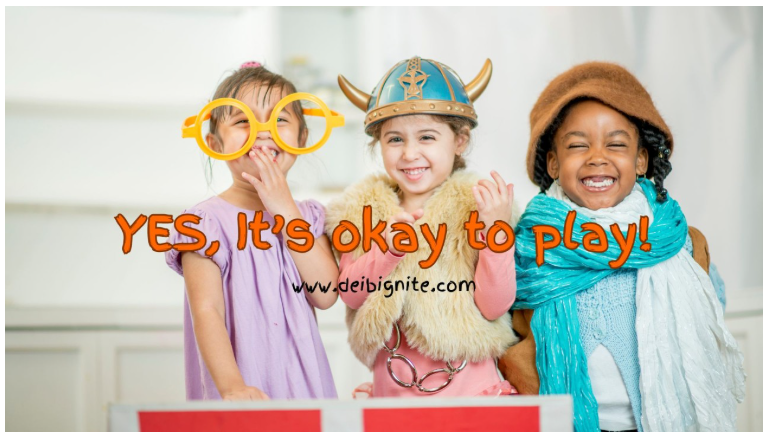
This is the power of playful learning in action! It breaks down barriers, fosters teamwork, and encourages creative thinking – all essential skills for effective DEIB implementation.
Playful environments also reduce the stakes of getting things wrong. In a game or simulation, mistakes are part of the process. That reframing is powerful. Additionally, fun activities invite multiple perspectives without forcing anyone into a spotlight. Everyone contributes, and therefore everyone feels ownership over the learning.
| Aspect | Traditional DEIB Training | Playful DEIB Training |
|---|---|---|
| Learning Environment | Formal, compliance-focused | Relaxed, psychologically safe |
| Engagement Level | Passive listening | Active participation |
| Emotional Connection | Anxiety and defensiveness | Curiosity and openness |
| Retention | Low — information-heavy | High — experience-based |
| Collaboration | Individual compliance task | Shared team experience |
The contrast is clear. Furthermore, playful DEIB training does not sacrifice depth — it delivers it more effectively by engaging both the head and the heart.

The Science Behind Playful Learning
Playful learning is supported by decades of research in cognitive science, educational psychology, and organisational behaviour. Understanding the science helps leaders make a confident, evidence-based case for adopting it in their organisations.
Enhanced Engagement
Fun captures attention in ways that lectures cannot. When learners are actively involved — solving puzzles, roleplaying scenarios, or competing in friendly challenges — their brains release dopamine. Dopamine sharpens focus and drives curiosity. As a result, participants stay present and motivated throughout the session rather than mentally checking out after the first slide.
Improved Memory Retention
Positive emotional experiences dramatically improve long-term memory. According to findings published by the American Psychological Association, emotional arousal enhances the encoding of memories. Therefore, when a DEIB concept is delivered through a memorable, enjoyable activity, it sticks. Participants recall not just what they learned but how they felt — and that emotional anchor drives behaviour change.
Increased Motivation to Explore
Enjoyment fosters a willingness to revisit uncomfortable territory. When fun in DEIB training becomes associated with positive outcomes, participants are more likely to continue exploring these topics independently. In fact, organisations that use playful formats often report increased voluntary engagement with DEIB initiatives long after the formal training ends.
Transforming DEIB Training with Fun: Practical Approaches
Fun in DEIB training must be purposeful, inclusive, and respectful. Done well, it accelerates insight. Done carelessly, it can trivialise serious issues. Therefore, it is essential to understand both what to avoid and what to embrace.
What NOT to Do
- Never use humour that mocks, stereotypes, or minimises lived experiences.
- Avoid gamifying sensitive topics in ways that create winners and losers around identity.
- Do not use fun as a distraction from genuine accountability and systemic reflection.
What TO Do: Engaging DEIB Activities That Work
Interactive games and simulations offer some of the most powerful engaging DEIB activities available. Role-playing exercises, for example, allow participants to safely step into different perspectives. Scenario-based simulations expose unconscious bias in low-risk environments. Similarly, creative DEIB storytelling — using fictional company names, composite characters, and narrative arcs — makes real-world inequities tangible without targeting individuals.
One compelling example comes from a deib ignite workshop broadcasted in the Danish television programme Koch’en på toppen on Viaplay. In one episode, employees were given a deliberate communication challenge through a puzzle exercise. Each employee received only partial instructions, and success required them to ask for help, listen carefully, and collaborate across differences. The exercise revealed how assumptions and communication styles affect teamwork — exactly the dynamics DEIB training aims to address. Moreover, participants reported the challenge as one of the most memorable learning moments, precisely because it was experiential and engaging.
Case studies with a twist are equally effective. Present real organisational scenarios — rebranded with fictitious company names — and invite teams to diagnose the DEIB issue, propose solutions, and debate trade-offs. This approach builds critical thinking alongside empathy.
The Real Impact of Fun in DEIB Training
Fun in DEIB training produces measurable, lasting benefits that go far beyond a single workshop. Organisations that embed playful, interactive learning into their DEIB strategy consistently report stronger outcomes across three key dimensions.
Reduced Resistance
Play disarms defensiveness in ways that direct instruction simply cannot. When participants are absorbed in a shared challenge, they stop guarding their responses. Consequently, conversations become more honest. People admit uncertainty, ask genuine questions, and engage with perspectives they might otherwise dismiss. That openness is the starting point for real cultural shift.
Enhanced Collaboration Across Difference
Playful activities naturally break down silos. When colleagues solve problems together — regardless of seniority, background, or identity — they build mutual respect and empathy. Furthermore, shared laughter is one of the fastest trust-builders available. Teams that laugh together are significantly more likely to have honest conversations about inclusion challenges when they return to their day-to-day work.
Sustainable Behavioural Change
Positive learning experiences create lasting behavioural change. In contrast to compliance training, which fades quickly, playful DEIB experiences embed values through emotion and action. Participants do not just know the DEIB principles — they have lived them, even briefly, in a safe space. That experiential foundation makes inclusive behaviour feel natural rather than imposed.
Ready to Make Your DEIB Training Fun and Effective?
Fun in DEIB training is not a nice-to-have — it is a strategic necessity for organisations serious about lasting inclusion. The science is clear. The case studies are compelling. The only remaining question is how to start. At DEIB Ignite, we specialise in designing engaging DEIB programmes that combine rigour with play. We help leadership teams unlock the power of interactive games, creative DEIB storytelling, and scenario-based learning to drive real culture change. Our approach turns DEIB from a corporate obligation into an energising, people-centred experience that leaders and teams actually look forward to.
- Custom interactive DEIB workshops designed for your team’s specific context.
- Leadership coaching that embeds inclusive behaviours through experiential learning.
- Fun in DEIB training frameworks that are both respectful and results-driven.
- Facilitation support to help your organisation navigate sensitive conversations safely.
Fun is not frivolous. It is, in fact, one of the most powerful tools available for creating safe, engaging, and effective DEIB learning experiences. The organisations that embrace it will build cultures where everyone belongs — and thrives.
Frequently Asked Questions
Why is fun an effective approach to DEIB training?
Fun in DEIB training works because it creates psychological safety, reduces anxiety, and encourages honest participation. When people are engaged in a playful activity, their defences lower naturally. As a result, they become more open to exploring uncomfortable topics, listening to different perspectives, and retaining the lessons learned. Play also triggers dopamine release, which sharpens focus and significantly improves long-term memory retention of DEIB concepts.
How does playful learning create safe spaces for discussing sensitive topics?
Playful learning reduces the perceived stakes of getting things wrong, which is essential when discussing sensitive DEIB topics. Games, simulations, and storytelling activities signal that curiosity is welcome and mistakes are part of the process. Furthermore, shared activities build trust between participants. That trust creates the psychological safety necessary for honest, productive conversations about bias, identity, and systemic inequity — conversations that traditional lecture formats rarely achieve.
What are some practical engaging DEIB activities organisations can use?
Practical engaging DEIB activities include role-playing simulations that explore bias in realistic workplace scenarios, interactive puzzle exercises that reveal communication and collaboration dynamics, and creative DEIB storytelling using fictional case studies. Additionally, scenario-based games where teams diagnose and solve DEIB challenges are highly effective. These approaches combine enjoyment with depth, ensuring that learning is both impactful and memorable for all participants across different learning styles.
How can organisations ensure fun in DEIB training remains respectful?
Organisations can keep fun in DEIB training respectful by using humour and play to explore systems and situations — never to mock identities or lived experiences. Facilitators should design activities that invite curiosity and empathy rather than competition around identity. Additionally, clear guidelines at the start of each session help participants understand the purpose of the playful format. When structured thoughtfully, fun enhances respect rather than undermining it.
What long-term benefits does fun in DEIB training produce?
Fun in DEIB training produces long-term benefits including reduced resistance to inclusion conversations, stronger cross-team collaboration, and sustainable behavioural change. Because positive emotional experiences embed learning more deeply than passive instruction, participants are more likely to carry inclusive behaviours into their day-to-day work. Moreover, organisations that use playful DEIB formats often see increased voluntary engagement with diversity and inclusion initiatives long after the formal training sessions have ended.