Belongingness is not only a personal desire, but also a social responsibility. It is one of the most fundamental forces shaping how people think, feel, and perform — especially at work. For centuries, philosophers asked what it means to truly belong. Today, psychologists and organizational researchers are answering that question with compelling evidence. The findings are clear: belonging is not a soft, optional extra. It is a core human need, a measurable driver of performance, and a shared obligation we all carry toward one another.
Belongingness Is Not Only a Personal Desire — It Is a Core Human Need
To understand why belonging matters so deeply, we need to look at human psychology. Self-determination theory, developed by researchers Deci and Ryan, identifies three basic psychological needs that every person carries. These are autonomy, competence, and relatedness. Autonomy is the need to act according to your own values. Competence is the need to feel capable and effective. Relatedness, however, is the need to feel genuinely connected to and cared for by others.
Belongingness directly fulfills the need for relatedness. Furthermore, it provides something no salary or job title can replace: a felt sense of security, support, and validation. When people feel they belong, they show up fully. They take risks, share ideas, and invest in their work. Therefore, belonging is not a perk — it is a psychological foundation.
- Autonomy: Acting in line with personal values and interests
- Competence: Feeling effective and capable in your role
- Relatedness: Feeling connected, seen, and valued by others
Additionally, when that need for relatedness goes unmet, people do not simply feel sad. They disengage, withdraw, and eventually leave — taking their talent with them.
The Science Behind Belonging: What Research Tells Us
Belongingness is not only a personal desire, but also a social responsibility — and the research backs this up powerfully. Studies across psychology, neuroscience, and organizational behavior consistently show that belonging produces measurable, positive outcomes. Moreover, the absence of belonging produces measurable harm. These are not abstract findings. They translate directly into how teams perform and how organizations grow.
Belonging Boosts Individual Well-Being
First, belonging has a profound impact on personal health and happiness. Research shows that strong social connection reduces stress hormones, lowers rates of anxiety and depression, and even improves immune function. People who feel they belong report higher self-esteem and greater resilience in the face of setbacks. Consequently, they recover faster from failure and stay motivated longer. In short, belonging keeps people well.
Belonging Drives Workplace Performance
Second, belonging improves how people work together. Teams with high belonging show greater creativity, stronger problem-solving, and higher productivity. Additionally, belonging promotes loyalty and commitment — two qualities that reduce costly staff turnover. When people feel accepted, they collaborate more openly and contribute more generously. As a result, organizations with inclusive cultures consistently outperform those without.
- Reduces stress, anxiety, depression, and loneliness in the workplace
- Increases self-esteem, happiness, and resilience among team members
- Improves learning, creativity, and day-to-day productivity
- Promotes loyalty, commitment, and effective cooperation
- Encourages empathy, altruism, and pro-social behaviour across teams
What Happens When Belonging Is Absent
In contrast, the cost of exclusion is severe. When people do not feel they belong, the consequences ripple outward far beyond one individual. Isolation and alienation breed disengagement. Disengagement breeds resentment. Furthermore, research links chronic exclusion to increases in aggression, prejudice, and antisocial behaviour. In a workplace context, this shows up as conflict, poor collaboration, and high attrition. These are not personality problems. They are structural ones.
Moreover, exclusion is not always overt. It often lives in small, everyday moments. A comment ignored in a meeting. A name mispronounced repeatedly. A team lunch no one thought to invite you to. These micro-exclusions accumulate quickly. They signal, loudly and clearly, that someone does not fully belong. Leaders must therefore train themselves to notice these moments — and act on them.
- Chronic exclusion increases disengagement and voluntary turnover
- Alienation reduces psychological safety and stifles innovation
- Micro-exclusions erode trust far faster than most leaders realise
Above all, organizations cannot afford to treat belonging as a background issue. The data makes that position indefensible.
Belongingness Is Not Only a Personal Desire — Leaders Must Own It
Belongingness is not only a personal desire, but also a social responsibility, and that responsibility sits most heavily on leaders. Culture does not build itself. It reflects the behaviours, decisions, and priorities of the people at the top. Therefore, leaders who want high-performing, innovative, and resilient teams must actively cultivate belonging. This is not about token gestures or diversity checkboxes. It is about consistent, intentional leadership behaviour.
Practical Ways Leaders Build Belonging
Fortunately, building belonging does not require a complete organisational overhaul. It starts with daily habits and conscious choices. Leaders who build belonging listen actively and empathically. They communicate openly and honestly, even when the message is difficult. Additionally, they recognize and celebrate the diverse perspectives that each person brings. They create space for people to contribute meaningfully — and they notice when someone is not contributing, and ask why.
- Listen actively and empathically in every conversation
- Recognise and celebrate individual and cultural diversity
- Communicate with honesty, clarity, and genuine openness
- Collaborate constructively and invite diverse contributions
Similarly, great leaders model vulnerability. They admit mistakes. They ask for help. By doing so, they signal to their teams that belonging is earned through authenticity — not performance.
Building a Culture of Belongingness Across the Organisation
Building belonging is not only a leadership responsibility — it is a collective one. Every person in an organisation contributes to its culture. Therefore, creating a genuine culture of belonging requires everyone to examine their own behaviour and assumptions. It means being inclusive, respectful, and appreciative of others every single day. It means recognising that diversity is not a problem to manage, but a strength to leverage.
According to Harvard Business Review, employees who feel they belong take 75% fewer sick days and are 56% more productive. These numbers are striking. Moreover, they confirm that belonging is not a feel-good initiative — it is a business imperative. Organizations that invest in belonging gain a measurable competitive edge.
Practically, this means building systems and structures that support inclusion. It means reviewing hiring practices, promotion criteria, and meeting norms through the lens of equity. Additionally, it means investing in leadership development that equips managers to lead inclusively. Furthermore, it means measuring belonging — through surveys, conversations, and honest reflection — and acting on what you find.
- Review hiring and promotion practices for hidden bias
- Create meeting norms that ensure all voices are heard
- Measure belonging regularly and act on the findings
- Invest in inclusive leadership training at every level
Frequently Asked Questions
What does belongingness actually mean in the workplace?
Belongingness in the workplace means feeling genuinely accepted, valued, and included as a full member of a team. It goes beyond surface-level friendliness. It means your perspective is heard, your contributions are recognized, and your identity is respected. When employees feel this way, they perform better, stay longer, and bring more of themselves to their work. Belongingness is not only a personal desire, but also a social responsibility that every team member shares.
Why is belongingness considered a fundamental human need?
Self-determination theory identifies relatedness — the need to feel connected and cared for — as one of three core psychological needs. Belongingness fulfills this need directly. Without it, people experience psychological distress, disengagement, and diminished performance. Research consistently shows that humans are wired for social connection. Therefore, denying belonging does not just feel unpleasant — it actively harms mental health, physical well-being, and motivation.
How does lack of belonging affect team performance?
When belonging is absent, teams suffer significantly. Disengagement rises and collaboration breaks down. People withhold ideas because they fear rejection or ridicule. Trust erodes, and conflict increases. Furthermore, turnover climbs as people seek environments where they feel valued. Micro-exclusions — small, daily moments of dismissal — accumulate into a culture of alienation. Consequently, leaders who ignore belonging are quietly undermining the very performance they are trying to build.
What can individual employees do to foster belonging?
Every person contributes to team culture, not just those in leadership roles. Employees can foster belonging by listening empathically, welcoming diverse perspectives, and recognising colleagues’ contributions. Additionally, speaking up when exclusion occurs — even in subtle forms — sends a powerful signal. Small actions matter enormously. Including someone in a conversation, learning to pronounce a name correctly, or simply acknowledging someone’s idea can meaningfully shift how connected that person feels.
Is belongingness the same as inclusion?
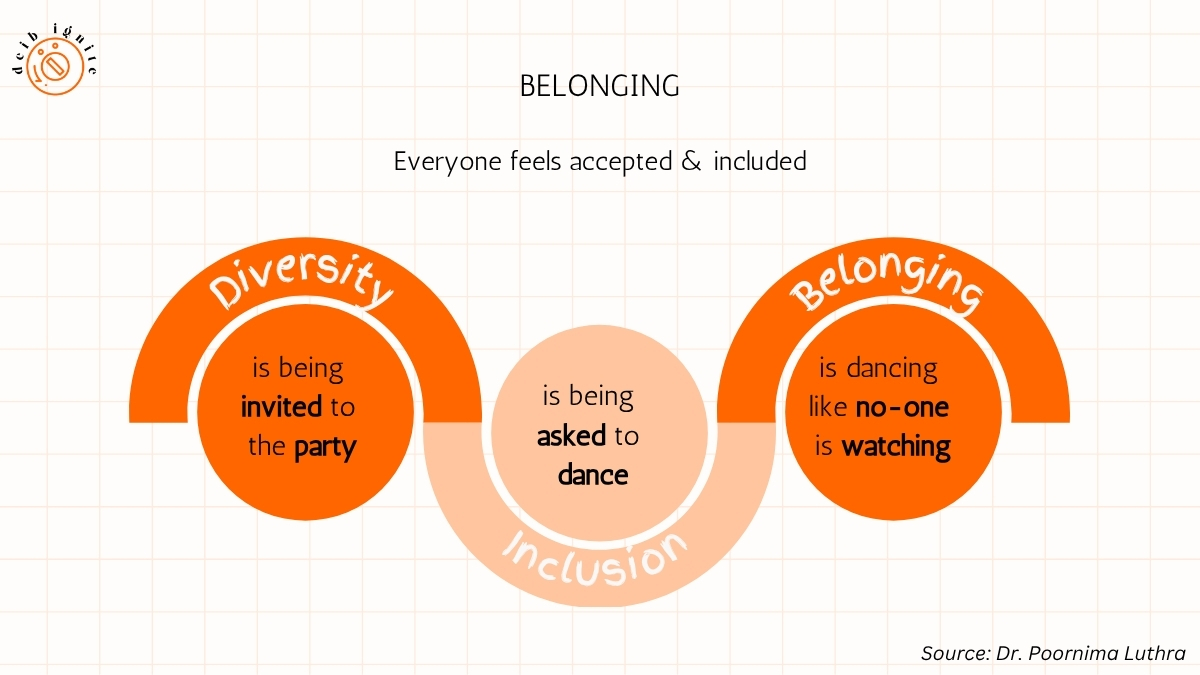
Inclusion and belonging are closely related but not identical. Inclusion is often structural — it refers to policies, practices, and systems that create equal access and opportunity. Belonging, however, is experiential. It is the felt sense that you are truly welcome, not just tolerated. You can have inclusion without belonging if someone is present but still feels invisible or undervalued. Therefore, organizations must pursue both — building inclusive systems and fostering genuine human connection simultaneously.