Leadership behavior toxicity is the single greatest determinant of whether a workplace is toxic or thriving. Not policy manuals. Not perks packages. Not even team chemistry. The research is unmistakably clear: culture flows directly from how leaders behave every single day. As an employee, you can practice gratitude, set boundaries, and seek mentorship — but a toxic workplace will always catch up with you. The emotional drain seeps into every interaction. So when you evaluate a workplace, watch for leadership behavior toxicity first. Everything else is secondary.
What Leadership Behavior Toxicity Actually Means
Leadership behavior toxicity is the pattern of leader actions, habits, and decisions that systematically erode psychological safety, trust, and employee wellbeing over time. It is not a single bad day or one sharp email. Leadership behavior toxicity is a sustained, repeated set of behaviors that signal to employees that they are not safe, not valued, and not heard. Understanding this distinction matters enormously, because it shifts the conversation away from personality clashes and toward measurable, changeable conduct.
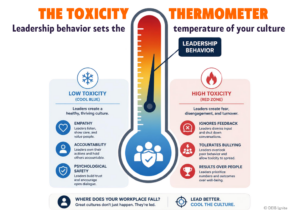
Furthermore, leadership behavior toxicity does not always look dramatic. It rarely involves shouting in hallways. More often, it operates quietly — through passive aggression, selective accountability, and subtle dismissal of dissent. These behaviors accumulate over weeks and months. As a result, employees stop speaking up, stop innovating, and eventually stop caring. That disengagement is not a talent problem. It is a leadership problem.
Behavioral science gives us a powerful lens for understanding why leaders behave the way they do. Tools like the Predictive Index behavioral profiling platform help leaders identify their natural drives and blind spots — and adapt their style before toxicity takes root. That self-awareness is the foundation of everything that follows.
The Five Faces of Leadership Behavior Toxicity
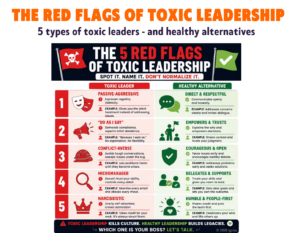
Toxic workplaces are built one leadership decision at a time. Recognizing the specific behavioral patterns behind leadership behavior toxicity gives leaders and employees alike the language and awareness to act. Additionally, naming these patterns removes the fog of confusion that keeps people stuck in harmful environments for far too long.
The Passive-Aggressive Leader
Sarcasm, backhanded compliments, and silent treatment signal that challenge is not welcome. This pattern creates a culture of fear where employees walk on eggshells rather than innovate. For example, a manager who says, “Wow, you actually met the deadline — miracle!” instead of offering genuine recognition quietly trains their team to shrink.
The “Do as I Say, Not as I Do” Leader
Demanding accountability from others while excusing personal misconduct destroys trust faster than almost any other behavior. Employees notice every gap between what leaders preach and what they practice. A leader who talks about work-life balance but sends emails at midnight — and expects immediate replies — sends a very clear message about what is actually valued.
The Conflict-Avoidant Leader
Avoiding tough conversations allows leadership behavior toxicity to fester in the shadows. When a senior employee belittles junior staff and a manager stays silent to “keep the peace,” that silence becomes an endorsement. Problems do not disappear when leaders look away. They grow.
The Micromanager
Controlling every detail and refusing to delegate stifles innovation and signals a fundamental lack of trust. Employees who feel micromanaged do not feel empowered — they feel surveilled. Consequently, their best thinking never reaches the table, because the psychological cost of trying is simply too high.
The Narcissistic Leader
Taking credit for others’ work, dismissing feedback, and expecting blind loyalty creates a cult-like culture where flattery is rewarded and dissent is punished. Similarly, this pattern accelerates talent loss, because the organization’s strongest contributors — who have options — leave first.

What the Research Says About Leadership Behavior Toxicity
Leadership behavior toxicity is not a soft concern — it has hard, measurable consequences on engagement, retention, and organizational performance. Decades of research consistently point to leader conduct as the primary driver of team outcomes. Moreover, the data makes a compelling business case that no competitive organization can afford to ignore.
| Research Source | Key Finding | Business Implication |
|---|---|---|
| Google Project Aristotle | Psychological safety — shaped by leader behavior — was the #1 predictor of team performance | Toxic leaders destroy the conditions for high performance |
| Harvard Business Review | 75% of workers have experienced toxic behavior at work; 50% left their jobs as a result | Leadership behavior toxicity drives costly voluntary turnover |
| Gallup State of the Global Workplace 2023 | Managers account for 70% of the variance in team engagement | Your boss impacts your wellbeing more than your salary or role |
| MIT Sloan (2024) | 68% of companies have DEIB policies; only 22% of employees feel truly included | Policies without behavioral accountability are meaningless |
Gallup’s State of the Global Workplace report consistently demonstrates that engagement is a leadership variable, not an HR variable. That reframing changes everything about how organizations should invest in culture-building.
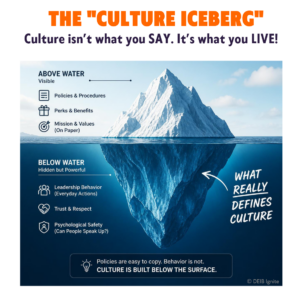
Why Policies Alone Cannot Fix Leadership Behavior Toxicity
Leadership behavior toxicity thrives precisely in the gap between what organizations say and what their leaders actually do. Many organizations pride themselves on robust anti-harassment policies, DEIB frameworks, and mental health resources. However, policies do not change behavior — behavioral accountability does. A policy is only as powerful as the willingness to enforce it at every level, including the top.
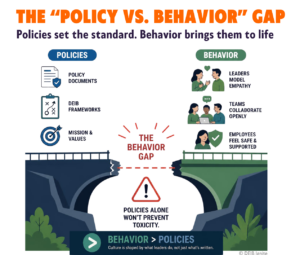
Consider the pattern: a company publishes a zero-tolerance bullying policy, but HR routinely ignores complaints about a high-performing VP. Employees learn quickly that the policy is decorative. In fact, a visible gap between stated values and lived reality is often more damaging than having no policy at all — because it signals that leadership knows the right language but refuses to live it.
This is where behavioral profiling becomes a genuine competitive advantage. Understanding why a leader behaves the way they do — their natural drives, their stress responses, their blind spots — gives organizations the insight to intervene early and coach effectively. Explore how the Predictive Index behavioral profiling approach equips leaders with that self-awareness before toxicity becomes entrenched.
Additionally, succession planning that ignores behavioral data is a pipeline for future leadership behavior toxicity. Organizations that promote solely on technical results without evaluating interpersonal conduct are systematically elevating their next generation of toxic leaders. Succession Planning Redefined offers a behavioral framework for identifying leaders who will build culture, not corrode it.
How to Spot a Non-Toxic Workplace Before You Accept the Offer
Identifying leadership behavior toxicity during a job search requires asking sharper questions and listening more carefully to what is not said. Most candidates evaluate compensation, title, and growth opportunities. However, the most important variable — leadership behavior — is often the least examined. Therefore, treat the interview as a two-way behavioral assessment.
- Ask about accountability: “Can you describe a time a leader here made a serious mistake? How was it handled?” Listen for ownership versus deflection.
- Probe feedback culture: “How does leadership respond when employees raise concerns?” Listen for specific processes versus vague reassurances.
- Test cultural consistency: “What has leadership done in the past year to actively improve workplace culture?” Generic answers reveal a lot.
- Request peer access: “Can I speak with someone who has been here longer than a year?” Scripted enthusiasm is a red flag. Honest nuance is a green one.
- Observe leadership behavior toxicity signals during onboarding: watch whether leaders blame others, dismiss emotions, or take credit for team wins.
Furthermore, pay attention to how leaders treat administrative staff, junior employees, and service workers during site visits. Leadership behavior toxicity almost always reveals itself in how power is exercised over those who cannot push back.
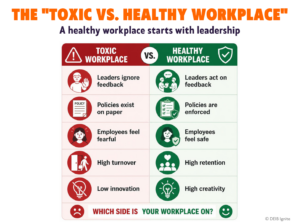
How Leaders Build Culture Instead of Corroding It
Leadership behavior toxicity is not inevitable — it is a choice, and so is its opposite. Leaders who actively choose to build healthy cultures do so through consistent, observable behavior that others can follow. Above all, they understand that culture is not declared in an all-hands meeting. Culture is enacted in every one-on-one conversation, every feedback session, and every moment of conflict resolution.
Model Empathy and Vulnerability
Leaders who acknowledge emotions and admit mistakes give their teams permission to do the same. That permission is the foundation of psychological safety. As research consistently shows, psychological safety unlocks the discretionary effort that drives innovation and performance. Kindness, practiced consistently, is not soft — it is strategic. Kindness as catalyst explores exactly how compassionate leadership drives measurable inclusion outcomes.
Enforce Standards Without Exception
Consistent accountability is the antidote to leadership behavior toxicity. If a high performer is toxic, address it — publicly if necessary. Favoritism toward results-at-any-cost signals that people are instruments, not partners. That signal destroys trust at scale.
Invest in Behavioral Self-Awareness
Leaders who understand their own behavioral drives — their natural urgency, their risk tolerance, their communication preferences — can adapt more effectively under pressure. Tools like Predictive Index provide that data in a reliable, actionable format. Moreover, as AI reshapes organizations, the human behavioral layer becomes more critical, not less. The Human Touch examines how leaders can move from data to wisdom in an AI-driven world.

Frequently Asked Questions
What is leadership behavior toxicity?
Leadership behavior toxicity is the sustained pattern of leader actions — such as micromanagement, passive aggression, conflict avoidance, and inconsistent accountability — that systematically erode trust, psychological safety, and employee wellbeing over time. It is not a single incident but a repeated behavioral pattern that defines how power is exercised within a team or organization. Identifying it requires observing behavior over time, not just reading policy documents.
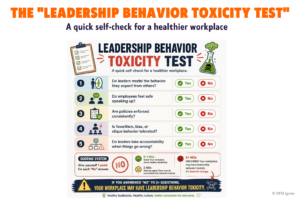
Can leadership behavior toxicity exist even when HR policies are strong?
Yes — and this is one of the most dangerous forms of leadership behavior toxicity. Strong policies without behavioral enforcement create a false sense of safety. Employees quickly learn whether leadership actually lives the values or simply states them. When toxic behavior goes unchallenged despite existing policies, the gap itself becomes a signal that undermines organizational trust far more than the absence of policy ever could.
How does behavioral profiling help address leadership behavior toxicity?
Behavioral profiling tools like the Predictive Index provide leaders with validated, reliable data about their natural drives, blind spots, and stress behaviors. Therefore, leaders can identify the specific patterns that put them at risk of toxic conduct — before those patterns damage their team. This self-awareness, combined with coaching, is one of the most evidence-based interventions available for preventing and reversing leadership behavior toxicity in organizations.
What should employees do if they are already in a toxic workplace?
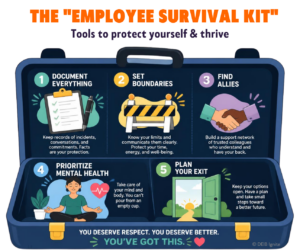
Employees experiencing leadership behavior toxicity should document incidents carefully, set firm boundaries around unreasonable demands, and build alliances with trusted colleagues. Additionally, prioritizing mental health through therapy, exercise, and boundaries outside of work is essential. Updating a resume and networking discreetly are practical steps toward an exit. Leaving professionally — even from a toxic environment — protects long-term career reputation and future opportunities.
How does leadership behavior toxicity affect organizational performance?
Leadership behavior toxicity directly reduces team engagement, increases voluntary turnover, and suppresses innovation. Research from Gallup shows managers account for 70% of the variance in team engagement — meaning toxic leadership is the primary driver of disengagement at scale. Furthermore, the financial cost of replacing employees who leave due to toxic leadership is substantial, typically ranging from one-half to two times annual salary per departure, making leadership behavior toxicity a measurable business risk.