The 2% Edge: The Marginal Gain That Changes Everything
In elite sports, a 2% improvement can mean the difference between gold and silver, between victory and defeat. It’s the extra sprint at the end of training, the refined technique, or the mental resilience that pushes an athlete over the finish line. Marginal gains—small, incremental improvements—are the secret to sustained success.
But here’s the truth: The biggest marginal gain isn’t in skills or strategy. It’s in behavior.

In elite sports, clubs spend billions on the “Briefcase”—scouting reports, technical training, and physical conditioning. Yet, the athletes who rise to the top are not those who solely focuses on honing their professional skills, but rather those who also master the “Head and Heart”: their behavioral drives, cognitive abilities, and emotional resilience. Talent and skills will take you some of the way, but how you behave—towards yourself and others—will take you all the way.
This is the 2% Edge: the competitive advantage gained by understanding and optimizing behavior. And it’s not just for athletes. It’s for People/HR professionals, business leaders, talent development managers, and DEIB specialists who want to unlock the full potential of their people and organizations.
The 2% Edge: Why Behavior is the Ultimate Competitive Advantage
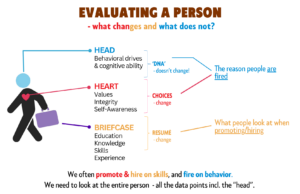
In business, just as in sports, organizations often hire for skills but fire for behavior. We bring people in based on their resume, experience, and technical abilities—the “Briefcase.” But we let them go because of how they behave under pressure, how they collaborate, or how they align with the team’s values—the “Head and Heart.”
This is the Hire/Fire Axis, and it reveals a critical truth: Skills get you in the door, but behavior determines your success.
Source: The Predictive Index
Traditional approaches to talent development—resumes, interviews, and generic training—focus on what people know and what they can do. But the real game-changer is why they do it and how they do it under pressure. Behavioral profiling, particularly through tools like Predictive Index (PI), provides actionable, science-backed insights into the drives and cognitive abilities that shape performance. It’s the shortcut to success, helping individuals, leaders, teams, and organizations find that extra 2-3% that separates them from the competition.
And here’s the kicker: Behavioral profiling isn’t just about performance. It’s about equity. By fostering an unbiased understanding of each other, we create workplaces where diversity is celebrated, inclusion is intentional, and belonging is the norm.
The Problem: Why Traditional Approaches Fall Short
The “Briefcase” Trap
Organizations hire based on resumes, experience, and technical skills—the “Briefcase.” But the employees who excel, innovate, and lead are those who align with the culture, values, and behavioral expectations of the team. Skills get you hired. Behavior gets you promoted—or fired.
The Performance Paradox
Talent is static, but performance fluctuates based on how people behave under pressure. A technically gifted employee might struggle in a high-stakes meeting if their behavioral drives clash with the team’s dynamics. A leader with a stellar track record might fail to inspire if they lack emotional intelligence or adaptability.
Traditional tools—like generic personality tests or skill assessments—fail to address this paradox because they:
- Focus on what people know, not how they apply it.
- Ignore the cognitive and behavioral demands of real-world situations.
- Lack scalability, actionability, and bias mitigation.
The “Idiot Box” Syndrome
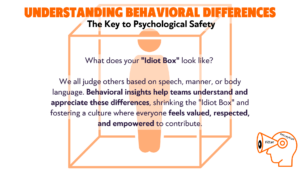
In sports, players and coaches often categorize teammates into two mental boxes: the “Good Guys” (those they trust) and the “Idiots” (those they don’t understand or like). The size of a player’s “Idiot Box” determines their ability to collaborate, communicate, and perform as a team.
In the workplace, the same phenomenon exists. Unconscious biases, misaligned expectations, and poor communication create “Idiot Boxes” that stifle innovation, erode trust, and hinder performance. As Maya Angelou famously said: “People will judge you by your actions, not your intentions.” The result? Silos, disengagement, and missed opportunities.
“Imagine what life is like if you have a huge ‘Idiot Box’? You cannot be a successful team player if all your team members are ‘idiots.’ The answer to this question will reveal your filters—and thus indirectly the fundamental values that each of us has.”
The 2% Edge Solution: Behavioral Profiling as the Gateway to Optimization
From Guesswork to Science: The PI Difference
Behavioral profiling isn’t just a tool—it’s a competitive advantage. The table below compares traditional talent management approaches with PI’s behavioral insights, demonstrating how small shifts in focus can lead to measurable improvements in performance, engagement, and inclusion.
| Aspect | Traditional Approach | Predictive Index (PI) Approach | Real-World Example |
| Hiring Focus | Skills, experience, and pedigree (“Briefcase”) | Behavioral drives and cognitive abilities (“Head and Heart”) | Michael Carrick: PI assessment revealed his natural leadership strengths, now cited as key to his success as Head Coach of Manchester United. |
| Firing Reason | Behavioral misalignment (Hire/Fire Axis) | Proactive behavioral insights prevent misalignment | Phil Jackson: Used behavioral profiling to align players’ motivations with team goals, delivering 11 championships in 20 seasons. |
| Self-Awareness | Limited; relies on subjective feedback | Structured behavioral profiling and 360-degree feedback | Tasha Eurich’s research: Leaders with self-awareness outperform peers by 30% in team satisfaction and innovation. |
| Leadership Development | Based on tenure or technical skills (Peter Principle risk) | Based on behavioral and cognitive data; tailored coaching | O’Reilly Hospitality: Reduced overall turnover by 20% and turnover at certain properties by 50-70%. |
| Team Dynamics | Subjective, trial-and-error approach | Team analytics based on behavioral data; science-backed | Chicago Bulls: Transformed from talented individuals to a championship-winning team through behavioral alignment. |
| Engagement | Generic surveys; limited actionability | PI Employee Experience Survey with prescriptive action plans | O’Reilly Hospitality: Achieved 75%+ survey participation and data-backed improvements in engagement. |
| DEIB Impact | Unconscious bias in hiring and promotions; “Idiot Box” syndrome | Unbiased behavioral insights; fosters psychological safety and inclusion | Teams understand and appreciate behavioral differences, reducing bias and fostering belonging. |
| Assessment Time | 20+ minutes per assessment | 6 minutes | Fast, efficient, and scalable across organizations. |
| Scalability | Point solutions; limited scalability | Full platform; highly scalable | Works for teams of 30 (Motionstrand) to 1,600+ (O’Reilly Hospitality Management). |
| Data-Driven Insights | Limited; relies on intuition | Science-backed; validated assessments and analytics | PI’s 65+ years of research and 10,000+ companies trusting the platform. |
| Outcomes | Inconsistent; marginal improvements | Measurable: 20-50% turnover reduction, 30% engagement increase, 25% performance improvement | Proven results across industries and organization sizes. |
Behavioral profiling—particularly through Predictive Index (PI)—is the missing link between talent and performance. It provides a scalable, unbiased, and actionable framework to optimize individuals, leaders, teams, and organizations by focusing on four key areas:
1. Optimizing the Individual: Personal Development Through Self-Awareness
The Challenge
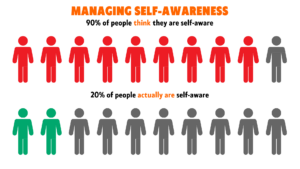
Leaders and employees often struggle with self-awareness, motivation, and adaptability. They may not understand their strengths, blind spots, or how their behavior impacts others.
Source: Dr. Tasha Eurich, Organizational Psychologist
The Solution
PI’s behavioral and cognitive assessments help individuals:
- Discover their natural drives (e.g., Dominance, Extraversion, Patience, Formality).
- Understand their cognitive strengths (e.g., Abstract Reasoning, Verbal Acumen).
- Align their roles with their behavioral profiles to maximize engagement and productivity.
The 2% Edge
When individuals understand their behavioral DNA, they can leverage their strengths, mitigate their weaknesses, and adapt their approach to different situations. This leads to higher engagement, faster development, and greater resilience.
Example: The Self-Aware Leader – Research by Tasha Eurich
Organizational psychologist Dr. Tasha Eurich has spent years studying the impact of self-awareness on performance. Her research reveals that leaders who cultivate self-awareness see a direct correlation with team performance and innovation. In one study, she found that leaders who regularly engaged in self-reflection outperformed their peers by up to 30% in key metrics like team satisfaction and innovation.
Take the example of a marketing director at a Fortune 500 company. After receiving 360-degree feedback, she realized her tendency to dominate conversations was unintentionally stifling creativity in her team. By implementing a structured feedback system and consciously adopting a more inquisitive approach, she transformed her leadership style. Within months, her team reported a 40% increase in psychological safety, and their campaign performance metrics improved by 25%.
As Eurich’s research shows: “Self-awareness is the ability to see yourself clearly and objectively through reflection and introspection.” And it’s this clarity that unlocks individual and team potential.
The same principle applies in business. Organizations can leverage PI’s tools to increase self-awareness and unlock individual potential—driving higher engagement, faster development, and greater resilience.
2. Optimizing Leaders: Leadership Development and Coaching
The Challenge
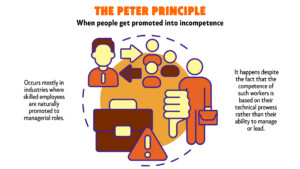
The Peter Principle in Action. What happens when you promote your star striker to coach? Their technical brilliance made them a legend on the pitch, but coaching demands different strengths: leadership, communication, and the ability to inspire a team. Without the right behavioral fit, they’re set up to fail.
Similarly, in business, leaders are often promoted based on technical skills or tenure, not their ability to inspire, communicate, or adapt. This leads to misaligned expectations, poor team dynamics, and low engagement.
This is the Peter Principle in action—elevating people based on past performance, not future potential.
Source: Dr. Laurence J. Peter
The Solution
Behavioral profiling. By understanding an individual’s drives, you can ensure they’re placed in roles where their natural strengths align with the demands of the job—avoiding the pitfalls of the Peter Principle.
Using the Predictive Index (PI), we help organizations:
- Identify high-potential leaders based on behavioral and cognitive data.
- Tailor coaching and development programs to individual strengths and blind spots.
- Improve communication by helping leaders adapt their style to different team members.
The 2% Edge
Leaders who understand their behavioral drives can communicate more effectively, build stronger relationships, and make better decisions. This leads to higher team performance, greater trust, and a more inclusive culture where people feel that they belong.
Example: From Player to Leader – The Michael Carrick Example
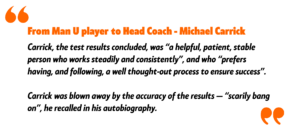
In 2015, while still a player at Manchester United, Michael Carrick completed a Predictive Index assessment. The results described him as helpful, patient, stable, and process oriented. More than a decade later, those same characteristics are now being cited as strengths in his leadership approach as Head Coach of Manchester United.
Source: The Athletic (New York Times), 22 May 2026
No assessment predicts the future. But cases like Carrick’s remind us that behavioral insights provide a valuable perspective—not just for hiring, but for leadership development and succession planning. By understanding his natural drives, Carrick was able to transition seamlessly into leadership, proving that the best leaders are those who know and leverage their behavioral strengths.
3. Optimizing Teams: Team Analytics and Dynamics
The Challenge
Teams often struggle with misalignment, poor communication, and lack of trust. Without a shared language or understanding of each other’s behavioral drives, collaboration suffers.
The Solution
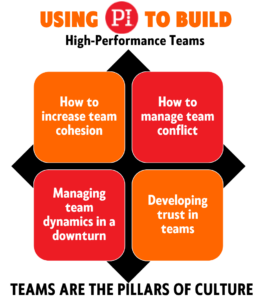
Using PI’s team analytics, we help organizations:
- Build high-performing teams by understanding how members’ behavioral drives complement each other.
- Improve collaboration by aligning roles with behavioral strengths.
- Foster psychological safety by addressing team dynamics proactively.
The 2% Edge
Teams that understand and leverage behavioral diversity can collaborate more effectively, innovate faster, and achieve better results. This leads to higher productivity, greater creativity, and stronger resilience.
Example: The Championship Team: Phil Jackson and the Chicago Bulls
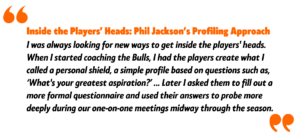
When Phil Jackson took over the Chicago Bulls in 1989, he inherited a team of talented individuals—including Michael Jordan—who couldn’t win a championship. The issue? Misaligned roles and unoptimized team dynamics. Jackson turned to behavioral profiling to understand his players’ motivations, both individually and as a team. By aligning his coaching methods with each player’s goals and the team’s objectives, he transformed the Bulls into a championship-winning machine, delivering 11 titles in just over 20 seasons. This is the power of team analytics and behavioral insights—turning groups of individuals into high-performing, legendary teams (Source: “Getting Teams To Work” – Predictive Index eBook).
Source: Phil Jackson, Memories
The same principle applies in business. Just as Jackson adapted his coaching to each player’s motivations, leaders can leverage PI’s behavioral insights to tailor their approach to their team’s drives. The result? A team that performs like champions—unlocking potential, fostering collaboration, and driving measurable improvements in engagement and satisfaction.
4. Optimizing Organizations: Engagement and Pulse Surveys
The Challenge
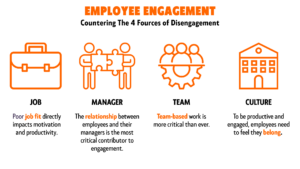
What happens when a football team has all the talent but struggles with morale and cohesion? Players may feel disconnected from the team goals or from each other. In business, disengagement, high turnover, and misaligned culture can derail even the most skilled organizations. Without data-driven insights, it’s difficult to identify and address the root causes of these issues.
Source: The Predictive Index o.a.
The Solution
Using PI’s engagement and pulse surveys, we help organizations:
- Diagnose the root causes of disengagement (e.g., lack of psychological safety, misaligned values, unmet DEIB goals).
- Design meaningful work experiences that align with employees’ drives.
- Improve retention by fostering a culture of belonging, purpose, and inclusion.
The 2% Edge
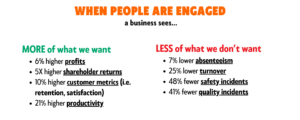
Organizations that listen to and act on behavioral data can create a culture where everyone feels valued, understood, and empowered. This leads to higher retention, greater innovation, and a stronger competitive advantage.
Source: Gallup, Forbes. Business Leadership Today
Example: O’Reilly Hospitality Management – Engagement at Scale
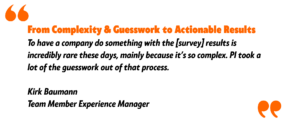
O’Reilly Hospitality Management (OHM) needed a way to measure the impact that the company’s growth was having on the close-knit culture it was built on and to ensure growth wasn’t coming at the expense of engagement. They chose the PI Engagement Survey (Diagnose).
With 1,600 team members across 36 properties, they achieved over 75% survey participation—a remarkable feat for a large, distributed organization. The team quickly analyzed results using comprehensive organizational and team reports that pinpointed exactly where to focus for the largest, fastest impact on engagement. By using the survey’s prescriptive action plans, OHM’s leaders now guide debriefs with the full organization and regional teams, ensuring data-backed improvements to their talent strategy and culture.
Source: O’Reilly Hospitality Management Case Study – The Predictive Index
The detailed, tailored results have allowed them to feel confident in making strides toward further improving engagement, and they’re already reaping the benefits of optimizing their talent.
In just one year using PI, OHM has:
- Increased its team member base by one-third, from 1,200 to 1,600.
- Reduced overall company turnover by 20%.
- Reduced turnover at certain properties by 50-70%.
The same principle applies across all businesses. Just as OHM used behavioral insights to build a culture of belonging, organizations can leverage PI’s engagement tools to create environments where everyone thrives—driving higher retention, greater innovation, and a stronger competitive edge.
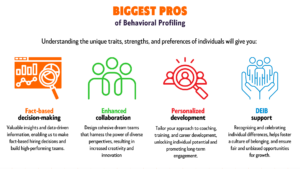
Source: deib ignite / the Predictive Index
The DEI&B Connection: How Behavioral Profiling Supports Diversity, Equity, Inclusion & Belonging
Behavioral profiling isn’t just about performance—it’s about equity. By providing an unbiased, data-driven understanding of each other, PI helps organizations:
1. Reduce Unconscious Bias in Hiring and Promotions
- PI’s validated hiring assessments focus on behavioral fit and cognitive abilities, not just experience or pedigree.
- This helps organizations eliminate bias and create more diverse, equitable hiring processes.
2. Foster Psychological Safety and Inclusion
- PI’s insights help teams understand and appreciate behavioral differences, reducing the “Idiot Box” syndrome.
- This fosters a culture of psychological safety, where everyone feels valued, respected, and empowered to contribute.
3. Align Values and Culture
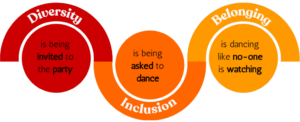
- PI helps organizations identify and align their values with the behavioral drives of their employees.
- This ensures that diversity, equity, inclusion and belonging are not just buzzwords but core pillars of the culture.
The Football Analogy: Lessons from the Pitch
In football, the difference between good and great often comes down to behavior. The most technically gifted players don’t always succeed if they lack the mental resilience, adaptability, or teamwork required at the elite level. Similarly, in business, behavior is the differentiator.
The 4 Power Drives on the Pitch (and in the Office)
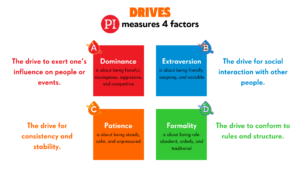
Just as football players have behavioral drives that shape their performance, so do employees. PI measures four key drives that influence how people work, communicate, and collaborate:
-
Dominance (A): The drive to influence people or events.
- On the pitch: A high-Dominance player (e.g., a captain) takes charge and makes decisive calls.
- In the office: A high-Dominance leader drives projects forward but may need to adapt their communication style to avoid overwhelming their team.
-
Extraversion (B): The drive for social interaction.
- On the pitch: A high-Extraversion player (e.g., a playmaker) communicates constantly, organizing the team.
- In the office: A high-Extraversion employee thrives in collaborative environments but may need to balance their energy with focused work.
-
Patience (C): The drive for consistency and stability.
- On the pitch: A high-Patience player (e.g., a defender) maintains composure under pressure.
- In the office: A high-Patience employee excels in structured roles but may need to adapt to fast-paced environments.
-
Formality (D): The drive for structure and rules.
- On the pitch: A high-Formality player (e.g., a defensive midfielder) follows the tactical plan precisely.
- In the office: A high-Formality employee values process and discipline but may need to embrace flexibility in creative roles.
Understanding these drives allows leaders to tailor their approach, teams to collaborate more effectively, and organizations to build a culture of trust and inclusion.
The 2% Edge Takeaway
The 2% Edge is the competitive advantage gained by understanding and optimizing behavior. It’s not about skills or strategy—it’s about how you behave towards yourself and others. PI’s behavioral profiling provides the science-backed insights to unlock hidden potential across four key areas:
-
Optimizing the Individual
- Discover natural drives, understand cognitive strengths, and align roles for maximum engagement and productivity.
-
Optimizing Leaders
- dentify high-potential leaders, tailor coaching, and improve communication to build stronger relationships and trust.
-
Optimizing Teams
- Build high-performing teams, improve collaboration, and foster psychological safety through behavioral diversity.
-
Optimizing Organizations
- Diagnose disengagement, design meaningful work experiences, and improve retention through a culture of belonging.
This is how small, incremental improvements create the marginal gains that separate good from great.

Frequently Asked Questions
What is the 2% Edge, and how does behavioral profiling unlock it?
The 2% Edge refers to the marginal performance gain that separates good from truly exceptional individuals, teams, and organizations. Behavioral profiling for success unlocks that edge by providing science-backed insights into the drives, motivations, and cognitive strengths that shape how people perform under pressure. Rather than focusing solely on skills, it optimizes the behavioral dimensions that determine long-term success. Applied consistently, this approach creates compounding gains across individuals, leaders, teams, and culture.
What is the Hire/Fire Axis, and why does it matter?
The Hire/Fire Axis describes the pattern in which organizations hire people based on technical skills — the Briefcase — but let them go because of how they behave — the Head and Heart. Skills secure the job offer. Behavior determines whether someone grows, leads, and stays. Understanding this axis is critical because it reveals that traditional resume-based hiring processes are optimized for the wrong variable. Behavioral profiling corrects this by making the Head and Heart visible, measurable, and actionable from the very start.
How does behavioral profiling support DEIB goals in organizations?
Behavioral profiling for success supports DEIB by shifting hiring and promotion decisions away from subjective bias toward objective, validated behavioral data. Tools like the Predictive Index assess behavioral fit and cognitive ability rather than pedigree or personal impression. Additionally, behavioral profiling gives teams a shared language for understanding differences — reducing the Idiot Box Syndrome that drives exclusion. As a result, organizations can build genuinely inclusive cultures where diverse behavioral styles are recognized as strengths rather than sources of friction.
What are the four key behavioral drives measured by the Predictive Index?
The Predictive Index measures four key behavioral drives: Dominance — the drive to influence people and events; Extraversion — the drive for social interaction and connection; Patience — the drive for consistency and stability; and Formality — the drive for structure and adherence to rules. Each drive shapes how a person communicates, collaborates, and performs under pressure. Understanding these drives allows leaders to tailor their approach, align roles with natural strengths, and build teams with complementary behavioral profiles.
How is behavioral profiling for success different from traditional personality tests?
Behavioral profiling for success, particularly through tools like the Predictive Index, differs from generic personality tests in three important ways. First, it is validated by decades of organizational science, making results reliable and replicable. Second, it is explicitly designed for workplace application — measuring the drives and cognitive abilities that predict job performance, not just personality type. Third, it is actionable, providing specific, practical insights that leaders can apply immediately to hiring, coaching, team-building, and engagement strategies.

Call to Action: Unlock Your 2% Edge
The 2% Edge isn’t just a concept—it’s a competitive advantage waiting to be unlocked. Whether you’re an individual looking to optimize your performance, a leader aiming to inspire your team, or an organization striving for a more inclusive culture, behavioral profiling is the shortcut to success.
Ready to Find Your 2% Edge?
Here’s how we can work together:
-
Workshops
- PLAY & LEARN Workshops: Combine behavioral insights with a hands-on learning-through-play approach to strengthen team dynamics, leadership, and DEI&B.
- Customizable Sessions: Tailored to your organization’s unique challenges and goals.
-
Motivational Speeches
- Keynotes and Talks: Inspire your team with real-world examples of how behavioral profiling can drive success.
- Interactive Sessions: Engage your audience with practical takeaways and actionable insights.
-
Consultancy
- Talent Optimization Strategy: Develop a customized plan to integrate behavioral profiling into your hiring, development, and engagement processes.
- DEI&B Framework: Build a data-driven, inclusive culture that celebrates diversity and fosters belonging.
-
Framework Agreements:
- Long-Term Partnerships: Embed behavioral profiling into your organization’s DNA with ongoing support and resources.
Next Steps
- Request a demo to see how PI can transform your organization.
- Sign up for the DEIB Ignite Newsletter to stay updated on the latest in talent optimization and inclusive leadership.
- Contact me for a quick chat about how we can unlock your 2% Edge together.
About deib ignite
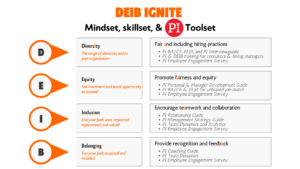
At DEIB Ignite, we believe that behavior is the ultimate competitive advantage. By combining behavioral profiling, playful learning, and a commitment to DEI&B, we help individuals, leaders, teams, and organizations find that extra 2-3% that separates them from the competition.
Our approach is science-backed, actionable, and inclusive. Whether you’re looking to hire smarter, develop leaders, build high-performing teams, or foster a culture of belonging, we provide the tools, insights, and engagement you need to succeed.
🔥Let’s Ignite Your Potential 🔥