Succession planning redefined starts with one bold truth: promoting your best performer does not guarantee your next best leader. Traditional succession planning focuses on past performance, tenure, and technical skills — and that approach is failing organizations at scale. The fix is behavioral DNA — the innate drives, cognitive abilities, and emotional intelligence that genuinely predict who will lead well under pressure. By mapping behavioral profiles to role demands, organizations can build leadership pipelines that are objective, inclusive, and built for the future.
Why Succession Planning Redefined Matters More Than Ever
Succession planning redefined is the practice of identifying future leaders based on behavioral potential rather than historical performance alone. Most organizations still rely on the older model — and it shows. A significant proportion of companies report having no ready-now leadership pipeline, leaving them vulnerable whenever a key role becomes vacant. The consequences are costly: rushed promotions, disengaged teams, and expensive external hires that could have been avoided.
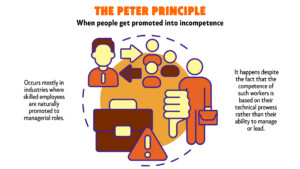
The Peter Principle captures this failure perfectly. People rise to their level of incompetence because organizations promote based on what someone has done, not what they are inherently wired to do. Technical excellence in an individual contributor role rarely translates into the strategic thinking, empathy, and influence required at the leadership level. Therefore, organizations that continue using outdated criteria are essentially gambling with their most critical asset — their leadership bench.
Furthermore, the stakes are rising. As markets shift faster and workforce demographics evolve, the demand for adaptable, emotionally intelligent leaders has never been higher. Organizations need a smarter, more scientific approach. Succession planning redefined delivers exactly that — a behavioral lens that separates genuine leadership potential from impressive past results.
What Is Behavioral DNA and Why Does It Predict Leadership Success
Behavioral DNA refers to the innate drives and cognitive tendencies that shape how a person thinks, communicates, makes decisions, and leads under pressure. Unlike technical skills, which can be taught through training, behavioral DNA is deeply embedded. It is the strongest and most reliable predictor of leadership success because it determines how someone will behave when the pressure is on — not just when conditions are ideal.
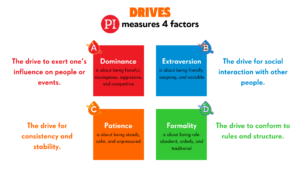
The Predictive Index (PI) platform measures four core behavioral drives that define leadership potential. First, Dominance — the drive to assert influence and make bold decisions. Second, Extraversion — the energy for collaboration, relationship-building, and communication. Third, Patience — the orientation toward consistency, stability, and follow-through. Fourth, Formality — the preference for structure, precision, and process adherence.
Additionally, PI measures cognitive ability — the speed and accuracy with which someone processes new information and solves complex problems. Together, behavioral drives and cognitive ability create a complete picture of leadership potential. This is the foundation of succession planning redefined — matching a person’s behavioral blueprint to the specific demands of the role they are being considered for.
| Behavioral Drive | Leadership Strengths | Leadership Risks (If Unchecked) |
|---|---|---|
| Dominance (A) | Decisive, assertive, drives action | May overwhelm quieter team members |
| Extraversion (B) | Collaborative, energetic, builds relationships | May struggle with focus or analytical depth |
| Patience (C) | Steady, reliable, detail-oriented | May resist urgency or rapid change |
| Formality (D) | Structured, precise, process-driven | May lack flexibility or creative risk-taking |
Succession Planning Redefined: How Behavioral Profiling Transforms the Process
Succession planning redefined through behavioral profiling gives HR professionals and senior leaders a structured, repeatable, and objective process for identifying who is genuinely ready to lead — and who needs targeted development before stepping up. The Predictive Index platform makes this process both rigorous and practical. Here is how it works in three clear stages.
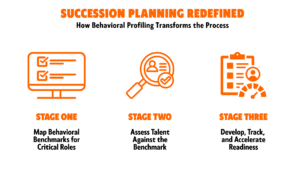
Stage One: Map Behavioral Benchmarks for Critical Roles
Every leadership role has unique behavioral demands. A Chief Financial Officer requires high Formality for precision and high Patience for methodical decision-making. A Sales Director thrives with high Dominance for drive and high Extraversion for relationship-building. PI’s Job Assessment tool helps organizations define the behavioral blueprint for each critical role before evaluating any candidates against it. This removes subjectivity from the very first step of the process.
Stage Two: Assess Talent Against the Benchmark
Once behavioral benchmarks are defined, PI’s Behavioral and Cognitive Assessments identify which employees naturally align with those demands. Importantly, this reveals high-potential leaders who might otherwise be overlooked — individuals who lack the seniority or visibility but possess the exact behavioral DNA the role requires. Succession planning redefined means uncovering hidden potential, not just validating the obvious candidates. PI’s Leadership Report then highlights each person’s natural strengths and specific development areas, creating a personalized roadmap for readiness.
Stage Three: Develop, Track, and Accelerate Readiness
Behavioral data enables organizations to build targeted development plans that close specific gaps — rather than sending everyone through generic leadership training. Moreover, PI allows teams to track progress over time with real-time data. This means succession pipelines stay dynamic and current, not frozen in an annual review cycle. As a result, organizations can accelerate the readiness of high-potential talent and fill critical roles from within, faster and more confidently than ever before.
For a deeper understanding of how behavioral profiling creates this kind of competitive advantage, explore the DEIB Ignite pillar article on behavioral profiling and the 2% edge.
Reducing Bias and Building Inclusive Leadership Pipelines
Reducing unconscious bias in succession decisions is one of the most powerful — and most overlooked — benefits of behavioral profiling. Without objective data, succession planning tends to favor people who “look like leaders” based on existing cultural norms. Consequently, women, underrepresented groups, and introverted high-performers are routinely passed over despite having the behavioral DNA that leadership roles demand.
Adverse impact reviews add an additional layer of fairness to the process. These reviews analyze whether assessment outcomes are creating unintended disparities across demographic groups. Furthermore, when behavioral benchmarks are defined clearly upfront, every candidate is evaluated against the same objective standard — not against the unconscious biases of the decision-makers in the room.
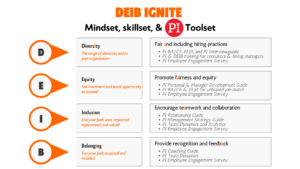
Similarly, building an inclusive leadership pipeline requires the kind of psychological safety and human-centered culture that supports every individual’s growth. As explored in the DEIB Ignite article on kindness as catalyst, creating environments where people feel genuinely valued is a strategic advantage — and it begins with how organizations identify and develop their leaders. Succession planning redefined is therefore not just a talent strategy. It is a DEIB strategy with measurable business outcomes.
The Measurable Results of Succession Planning Redefined
Succession planning redefined through behavioral alignment delivers tangible, bottom-line results that business leaders can measure and communicate to boards and stakeholders. Organizations that integrate behavioral profiling into their succession processes consistently report stronger internal promotion rates, reduced leadership turnover, and faster time-to-productivity for newly promoted leaders. These are not soft outcomes — they are competitive advantages that compound over time.
Consider what becomes possible when leaders are placed in roles that match their behavioral DNA. Their teams perform better because the leader is operating from a position of natural strength rather than constant effort to compensate for misalignment. Additionally, when development plans are based on specific behavioral gaps rather than generic frameworks, leaders grow faster and more confidently. The 2% edge — the marginal, compounding gain from getting leadership decisions right — shows up most clearly here.
Furthermore, the cost of getting it wrong is significant. A poor leadership promotion typically costs between one and two times the individual’s annual salary when you factor in lost productivity, team disengagement, and eventual replacement. Therefore, investing in behavioral profiling as part of succession planning is not an expense — it is a risk mitigation strategy with an exceptional return. Learn more about how behavioral profiling creates this edge in the DEIB Ignite behavioral profiling guide.

Your Succession Planning Redefined Action Plan
Succession planning redefined in your organization begins with five clear, sequential steps that any HR leader or executive team can implement. These steps are grounded in behavioral science and designed to create a pipeline that is objective, inclusive, and built for long-term performance.
- Define behavioral benchmarks for every critical leadership role using PI’s Job Assessment tool before evaluating any candidates.
- Assess your current talent pool with PI’s Behavioral and Cognitive Assessments to identify who has the behavioral DNA to lead — not just who is currently performing well.
- Develop personalized growth plans using PI’s Leadership Reports to address specific behavioral and cognitive gaps for each high-potential individual.
- Review for bias and equity by running adverse impact analyses to ensure your succession pipeline reflects the full diversity of your organization’s talent.
- Track, measure, and iterate using real-time behavioral data to keep your pipeline dynamic, relevant, and continuously improving.
Additionally, succession planning redefined is not a one-time project — it is an ongoing discipline. Organizations that treat it as a living process, rather than an annual exercise, consistently outperform those that do not. Above all, the goal is clarity: knowing exactly who your next generation of leaders is, what they need to get there, and how to develop them with precision and purpose.

Frequently Asked Questions
Why does traditional succession planning fail so often?
Traditional succession planning fails because it focuses on past performance, tenure, and technical skills rather than the behavioral and cognitive abilities that leadership roles actually demand. This approach leads directly to the Peter Principle — promoting people to their level of incompetence. As a result, organizations end up with leaders who excelled as individual contributors but struggle with team dynamics, strategic thinking, and the interpersonal demands of senior roles. Succession planning redefined addresses this gap by assessing future potential, not just historical results.
How is behavioral profiling different from a standard personality test?
Behavioral profiling through Predictive Index is fundamentally different from generic personality tests. PI is validated specifically for workplace use, backed by decades of research, and designed to predict job performance rather than simply describe personal traits. It provides role-specific, actionable insights that tell you not just who someone is, but whether their behavioral DNA aligns with the specific demands of the leadership role in question. Standard personality tests rarely offer that level of operational precision or predictive validity.
Can behavioral DNA really predict who will succeed as a leader?
Yes — behavioral drives and cognitive ability are among the strongest predictors of leadership success available to organizations today. Succession planning redefined is built on this evidence. PI’s assessments measure the innate tendencies that determine how someone makes decisions, influences others, manages pressure, and processes new information. When these are matched to the behavioral demands of a specific leadership role, the predictive accuracy is significantly higher than relying on performance reviews or manager recommendations alone.
How do we get senior leader buy-in for a behavioral approach to succession?
Start with the financial case. Poor leadership promotions cost organizations between one and two times the individual’s annual salary in lost productivity, disengagement, and replacement costs. Present the business case for behavioral profiling in terms of risk reduction and ROI. Additionally, offer a pilot program focused on one or two critical roles, so senior leaders can see the difference in decision quality firsthand. Sharing case studies of organizations that have improved internal promotion rates using PI data also accelerates buy-in significantly.
What is the ROI of using behavioral profiling in succession planning?
Succession planning redefined through behavioral profiling consistently delivers measurable returns. Organizations using PI data in succession decisions report meaningful reductions in leadership turnover, faster time-to-productivity for promoted leaders, stronger team performance under behaviorally aligned managers, and higher rates of internal promotion. Beyond the financial savings, the strategic value is compounding — every time you place the right leader in the right role, you multiply the performance of every person they lead. That is the 2% edge in action.