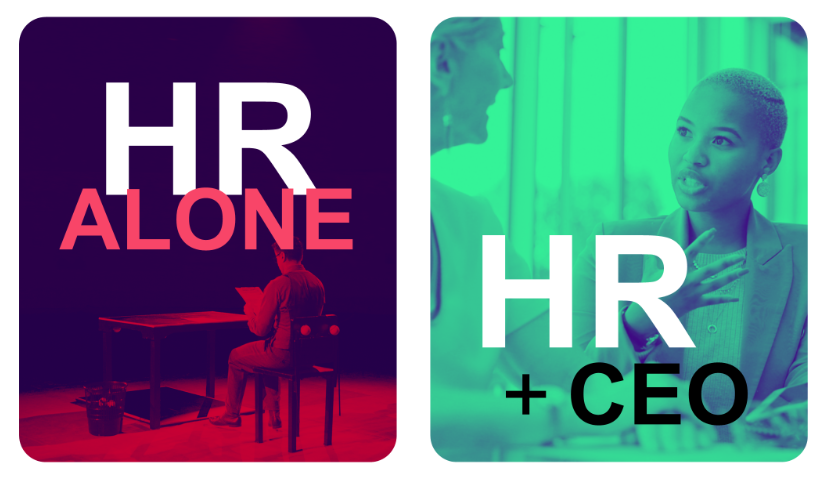
HR as strategic powerhouse is no longer a vision — it is the new organizational reality. The bond between a CEO and their Chief Human Resources Officer (CHRO) has become one of the most consequential relationships in modern business. Today’s biggest challenges — talent shortages, generational friction, and retention crises — are fundamentally people problems. That means HR is uniquely positioned to solve them. This article explores why the CEO-CHRO partnership is transformative and how HR leaders can step fully into that strategic role.
HR as Strategic Powerhouse: The Evolution from Admin to Driver
For decades, HR was viewed as an administrative function — handling paperwork, managing compliance, and processing payroll. That era is over. HR has evolved into a strategic driver of organizational performance, shaping culture, capability, and competitive advantage. This shift did not happen overnight. It accelerated through waves of disruption, most notably the post-pandemic period, which exposed deep vulnerabilities in how organizations manage human capital.
The so-called employee energy crisis captures this moment well. Talent shortages are widespread across industries. Employee disengagement remains stubbornly high. Burnout has reshaped what workers expect from employers. Furthermore, the war for skilled talent shows no sign of easing. Organizations that treat HR as a back-office function are losing ground fast to those that treat it as a front-line strategic asset.
The following table contrasts Traditional HR with Strategic HR across five critical dimensions:
| Aspect | Traditional HR | Strategic HR |
|---|---|---|
| Focus | Administrative compliance and process | Organizational performance and capability |
| Role in Organization | Support function, reactive | Strategic partner, proactive |
| CEO-CHRO Relationship | Transactional and arm’s-length | Collaborative and deeply integrated |
| Impact on Bottom Line | Indirect, seen as a cost centre | Direct, linked to revenue and growth |
| Approach to Challenges | Policy-driven, risk-averse | Data-informed, solution-oriented |
The contrast is stark. Strategic HR does not simply respond to problems — it anticipates them. As a result, organizations with a strong strategic HR function consistently outperform those without one in talent retention, innovation, and employee performance.
Modern HR now drives organizational strategy, shaping culture, capability, and competitive advantage. Behavioral datacan help HR leaders understand the drives and motivations of their workforce, enabling them to design more effective talent strategies and align people with business goals.
The CEO-CHRO Bond: A Transformative Partnership
The CEO-CHRO partnership is increasingly recognized as one of the defining relationships in a high-performing organization. CEOs are now directly linking earnings, revenue growth, and competitive positioning to people issues — specifically hiring quality, leadership development, and retention. When a CHRO understands the business deeply and speaks the language of growth, the CEO gains a genuine strategic confidant.
However, many HR functions have not yet made this leap. Research from the Predictive Index highlights that a significant gap still exists between what CEOs need from HR and what HR currently delivers. CEOs want HR to diagnose talent problems with precision, link people strategies to financial outcomes, and move with urgency. That is a high bar — and meeting it requires HR to first address its own internal challenges.
What CEOs Need Most from Their CHRO
CEOs consistently identify a small number of needs from their HR leadership. First, they want data-driven insight — not intuition, but evidence. Second, they want HR to understand the commercial strategy deeply enough to align talent decisions accordingly. Third, and perhaps most importantly, they want HR to bring solutions, not problems. A CHRO who walks into the boardroom with a diagnosis and a plan immediately commands a different kind of respect.
Additionally, CEOs want their CHRO to be a culture guardian — someone who actively monitors organizational health and flags risks before they become crises. Consequently, the CHRO’s seat at the executive table is not just symbolic. It is operationally essential when the partnership is built correctly.

What is holding your organisation back?
HR as Strategic Powerhouse: The Five Biggest Business Challenges
HR as strategic powerhouse finds its clearest expression when it tackles the challenges that keep CEOs awake at night. In 2026, organizations face a cluster of interconnected people challenges that no other function is better placed to address.
- Talent shortages: Competition for skilled workers remains fierce. HR can solve this through proactive talent pipeline development and employer brand investment.
- Generational friction: Four generations now work side by side. HR can design inclusive structures that leverage each generation’s strengths rather than letting differences create conflict.
- Retention crises: Replacing a single employee is costly in time, money, and morale. Strategic HR focuses on understanding the root causes of turnover and addressing them proactively through targeted talent retention strategies.
- Leadership gaps: Organizations frequently promote technical experts into leadership roles without adequate preparation. HR can build leadership pipelines that develop capability before it is urgently needed.
- Cultural misalignment: When organizational culture does not match stated values, performance suffers. HR plays a central role in diagnosing the gap and designing meaningful interventions.
Furthermore, HR is uniquely positioned to connect these challenges to each other. Talent shortages worsen retention problems. Leadership gaps deepen cultural misalignment. A strategic HR function sees these connections clearly and designs integrated solutions — not isolated initiatives.
Reframing HR’s Focus on Human Capability
HR’s true strategic value lies in building human capability — a concept championed powerfully by HR thought leader Dave Ulrich. Ulrich argues that HR’s purpose is not simply to manage people processes. Rather, it is to build the individual and collective capabilities that enable an organization to compete and grow. This reframe changes everything.
When HR leaders ask “What capabilities does our organization need to win?” rather than “How do we fill this vacancy?”, they shift from transactional thinking to strategic thinking. Tools like the Predictive Index (PI)can help HR leaders build the human capabilities that give organizations a lasting competitive edge. Dave Ulrich’s work consistently demonstrates that human capability — the combined skills, mindsets, and energy of a workforce — is the most durable source of competitive advantage available to any organization. Furthermore, capability-building is an investment that compounds over time, unlike many other business expenditures.
Applying the Human Capability Framework in Practice
Applying Ulrich’s framework means HR leaders need to work closely with the CEO and executive team to identify which capabilities are critical to the organization’s three-to-five-year strategy. Additionally, HR must audit current capability levels honestly, identify the gaps, and build a structured roadmap to close them. This executive HR roadmap becomes the backbone of the CEO-CHRO strategic conversation.
Moreover, HR strategic impact grows exponentially when it moves from defending headcount budgets to presenting capability investment cases. When HR speaks about return on human capital investment, it earns credibility with finance, operations, and the CEO simultaneously. That credibility is the foundation of genuine strategic influence.
Becoming Your CEO’s Most Valuable Partner
Positioning HR as a strategic partner to the CEO requires deliberate, disciplined action — not just good intentions. The Predictive Index’s eBook, Become Your CEO’s Most Valuable Partner, offers an outstanding executive HR roadmap for HR leaders ready to make this shift. It provides concrete frameworks for aligning HR strategy to business outcomes and earning a genuine seat at the leadership table. You can explore the Predictive Index’s resources here to access tools that support this transformation.
HR as strategic powerhouse demands that HR leaders take a series of specific, intentional steps. First, they must deeply understand the CEO’s top three business priorities — not in HR terms, but in commercial terms. Second, they must connect every major HR initiative directly to one of those priorities. Third, they must measure and communicate HR’s impact in the language of the business: revenue, growth, retention rates, and capability scores.
- Listen to the business first: Spend time understanding commercial strategy before designing HR solutions. This builds relevance and trust.
- Bring data to every conversation: Quantify talent risk, engagement trends, and capability gaps so decisions are evidence-based.
- Align HR initiatives to strategic priorities: Every program HR runs should directly support at least one of the CEO’s stated business goals.
- Build CEO confidence through consistency: Show up prepared, follow through reliably, and communicate proactively. Trust is earned incrementally.
- Champion talent retention strategies proactively: Present retention as a commercial issue, not just an HR metric, and you will immediately speak the CEO’s language.
Additionally, the most effective CHROs create regular rhythm with their CEO — brief weekly check-ins, monthly strategic reviews, and quarterly talent deep-dives. This consistent contact ensures HR stays close to the business pulse and never operates in isolation from it.

Frequently Asked Questions
How has the role of HR evolved beyond traditional hiring and firing?
HR as strategic powerhouse represents a complete transformation from its administrative roots. Modern HR now drives organizational strategy, builds leadership pipelines, shapes culture, and directly influences financial performance. The focus has shifted from managing processes to building the human capabilities that give organizations a lasting competitive edge. HR is no longer a back-office function — it is a front-line driver of organizational success.
Why is the CEO-CHRO relationship critical in 2026?
The CEO-CHRO partnership is critical because almost every major business challenge today is fundamentally a people challenge. Talent shortages, leadership gaps, and retention crises all require human capital expertise to solve. When the CHRO understands commercial strategy deeply and the CEO trusts HR to deliver, the organization moves faster, retains talent better, and builds stronger leadership pipelines. That partnership is a measurable competitive advantage.
What are the biggest challenges businesses face that HR can address?
The five biggest challenges HR is uniquely equipped to address are talent shortages, generational friction, retention crises, leadership pipeline gaps, and cultural misalignment. Strategic HR does not treat these as separate problems. Instead, it recognizes how they interconnect and designs integrated solutions. Furthermore, HR strategic impact grows when these solutions are presented in business terms — as drivers of revenue, growth, and organizational resilience.
How does Dave Ulrich’s work apply to modern HR strategy?
Dave Ulrich champions the idea that HR’s core purpose is building human capability — the collective skills, energy, and mindsets of the workforce. This reframes HR’s mission entirely. Instead of filling roles reactively, HR proactively builds the organizational capabilities needed to execute the business strategy. Ulrich’s framework gives HR leaders a rigorous, credible foundation for positioning themselves as indispensable strategic partners to their CEO and executive team.
What practical steps can HR leaders take to become a CEO’s most valuable partner?
HR leaders can take several practical steps immediately. First, deeply learn the business strategy and connect every HR initiative to a commercial priority. Second, bring data and evidence to every executive conversation. Third, present talent retention strategies as commercial imperatives rather than HR metrics. Fourth, build consistent executive engagement rhythms with the CEO. Above all, speak the language of business outcomes — not HR processes — and your strategic credibility will grow steadily.
Click HERE to download your complimentary copy of the Predictive Index ebook “Become your CEO’s Most Valuable Partner”.